


| << Prev || עברית || Français || Русский || Next >> |
Part Five - The Economic Plan
Basic Guidelines for the Economic Plan
For the first three decades of Israel's existence, its economy was socialist and centralized. Only in the fourth decade of its existence did extensive liberalization in the market begin, with significant economic growth taking place in parallel. In the past thirty years, the GDP of the State of Israel has grown tenfold and the standard of living has improved significantly. This is not a coincidence. Looking at the economic situation of the nations of the world, it seems clear that the adoption of a liberal economic policy which encourages free enterprise brings growth and prosperity for all segments of the population, while the policy of a centralized economy with government interference inhibits the growth and undermines all the segments together. The economies of the countries which lead in indices of economic freedom, such as Switzerland and Singapore, have enjoyed even more rapid growth during this time.
The Zehut Party believes that a free market economy is the most efficient model and that its adoption is the key to the future growth of the Israeli economy. Moreover, it is also the most moral and just model, because it does not harm the freedom of Israeli citizens to conduct transactions of their own free will and to work to improve their economic situation. The Zehut Party will act to reduce government involvement in the economy, reduce the bureaucratic apparatus and promote economic freedom in the State of Israel.
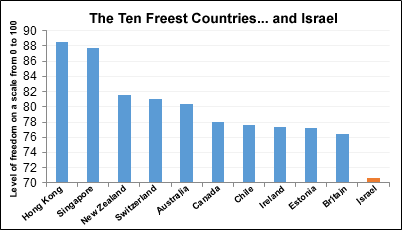
The State of Israel is blessed with intellectual and entrepreneurial capital, which gives it a significant advantage in the development of start-ups and high-tech industries. Adopting the principles of the free market will enable this advantage to be expressed in the best and most effective manner. As can be seen in the following graph, the State of Israel lags behind in the indices of economic freedom. According to the Heritage Foundation, Israel is only 35th in the world in terms of economic freedom.
We aim to make Israel one of the world's leaders in the economic freedom index.
The chapters in this part of the platform will outline the steps that the Zehut Party will take in order to promote economic freedom in various areas of the Israeli economy.
The effect of the policies on the lowest deciles
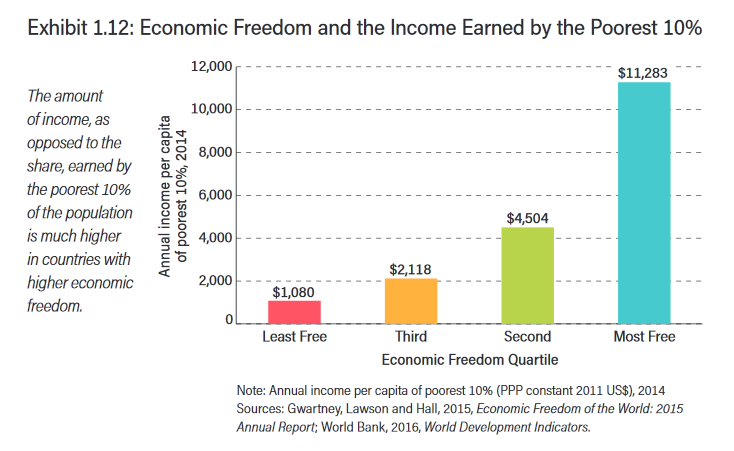
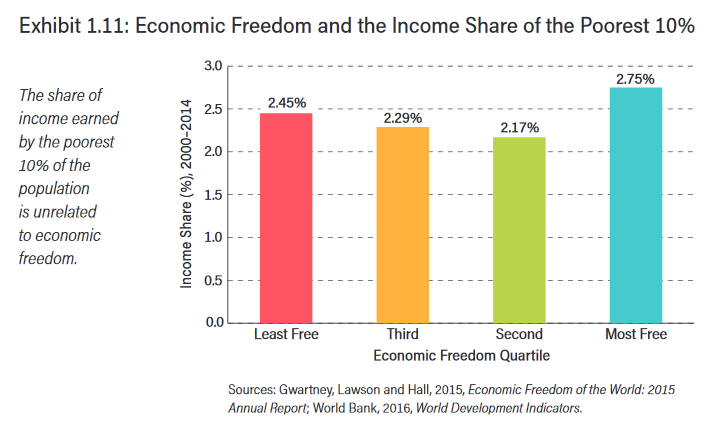
Sometimes it is argued that the free market is beneficial only for the rich, and that the poor are left behind – but the opposite is true. In fact, a liberal economic policy is particularly helpful to the lower deciles. As shown in the first graph, despite the fear of expanded gaps, it is specifically in the most capitalist nations that the bottom decile's share of national income is the highest. As the second graph shows, the absolute income of the lowest decile in the most liberal countries is much greater than that in less liberal countries. In other words, the lowest deciles in countries that have adopted the free market model prosper more – both relative to the other citizens of the country and in absolute terms.
Lightening the burden of regulation
One of the most striking differences between the Israeli economy and the world's successful economies is the abundance of laws and regulations that limit, regulate and manage the economic and social life of the Israeli citizen.
Zehut believes that the freedom to act, trade, work and maintain a social and economic life far from the watchful eye and the heavy hand of the central government is essential for a life of freedom and prosperity.
According to the Fraser Institute, the State of Israel stands at 80th place in the world according to the "Regulation Index". In other words, the burden of regulation on the citizens of all the successful countries in the world is much lighter than that of Israeli citizens. The countries that suffer from regulation more than the State of Israel include countries such as Gambia, Ghana and Greece. These are not countries worth emulating.
A central part of Zehut's program for the promotion of economic freedom in Israel is a significant easing of the burden of regulation in all areas of the economy by a wide ranging – but considered – elimination of unnecessary laws and regulations.
Lowering the cost of living
Because state-sponsored monopolies, lack of competition, and customs are among the main causes of the rising cost of living, Zehut's vision for the struggle against the cost of living is to turn Israel into a free trade zone. Zehut will act to abolish the restrictions that exist today on free competition and minimize the state's involvement in the economy. Free competition, as practiced in prosperous countries such as Switzerland and Hong Kong, is also the most efficient and moral mechanism that guarantees, apart from maintaining personal liberty and freedom of occupation, low prices, high quality and a variety of products in almost every area. Zehut's economic plan will encourage free competition and growth of the Israeli economy, thereby reducing the cost of living.
| << Prev || עברית || Français || Русский || Next >> |